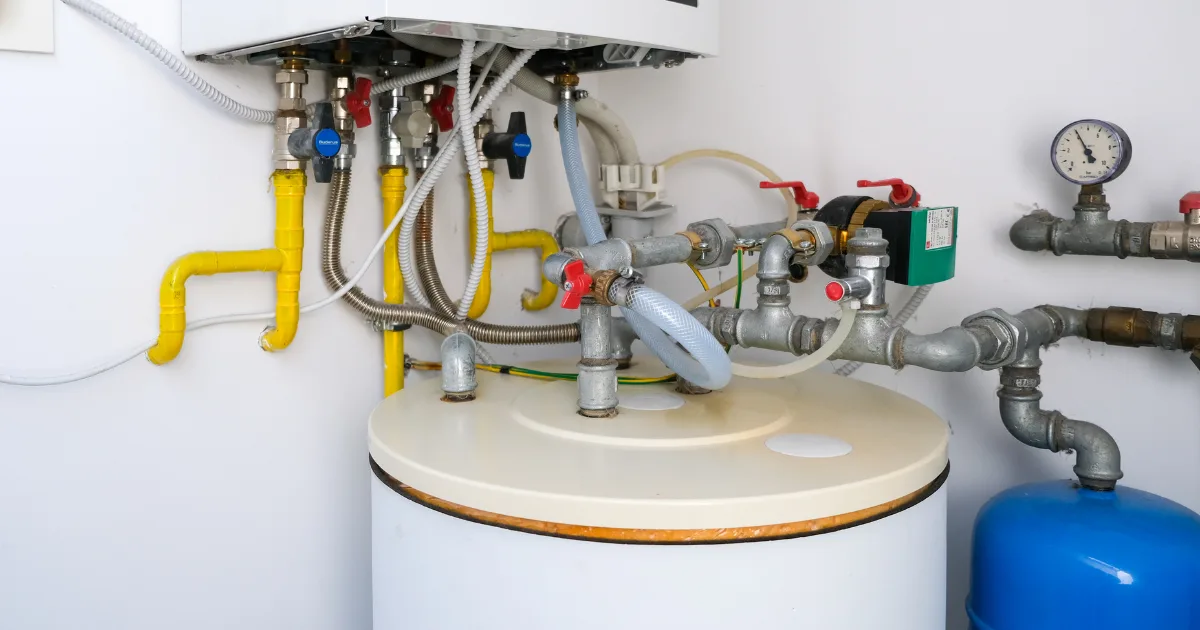

Why Is My Hot Water System Leaking? A Sunshine Coast Plumbers Complete Guide
A leaking hot water system is one of those problems that you don’t always see coming – you might spot a puddle on the way to the shower or hear a steady drip in the garage on a cold Buderim morning – but it always seems to happen at the worst possible time. The good news is that not every leak is a total disaster, and few of them you can safely manage yourself while waiting for a plumber. The important part is working out where that water is coming from, because that single clue usually tells you whether you’re looking at a $200 valve or a tank that’s well and truly reached the end of its life. This guide walks you through it the same way we’d talk you through it on the phone – what’s leaking, why, what to do right now – and when it’s time to call our qualified team at DYFA Plumbing.

IN A HURRY? HERE’S THE SAFE FIX.
- Is it dangerous? Smell gas, see scorching or any water near a power point/meter box? STOP! Call us immediately – and if you smell gas, turn it off at the bottle/meter and ventilate.
- Turn off the heat source. If it’s electric, switch it off at the meter box (its own breaker). Gas? Turn the gas isolation valve at the unit to off. Solar – switch off the booster.
- Turn off the water to the unit. Close the cold-water isolation valve on the pipe that is entering the top of the heater. If there’s no valve, use your main water meter tap.
- Contain and note it. Towel or bucket the water and take a photo of where it’s dripping from – this saves time when we arrive.
But what if there’s a steady drip from the relief valve only, and everything else is dry?
That’s very normal – read the relief-valve section below before you worry.
First Things First – is it actually a leak?
Before you shut everything down, rule out the two things that look like leaks – but actually aren’t.
- Condensation: a new or recently refilled system, or a super humid Sunshine Coast day, can sweat and leave beads of water on the tank that drip to the floor – wipe it dry, wait an hour and see if it comes back. Condensation stops – a real leak doesn’t.
- Normal relief-valve discharge: It is completely normal for the temperature-pressure relief (TPR) valve to release some water while the tank heats, that’s it doing its job, letting expanding hot water escape. An occasional cupful is fine – but a constant stream is not (more on this below…).
If it’s neither of these – then you’ve got a genuine leak – so it’s time to find it.
Where is it leaking from? Here’s a quick diagnosis.
Where the water appears is the single biggest clue to what’s wrong and how urgent it is. Find your leak in the table and match the cause.
| Where it’s leaking | Most likely cause | Urgency | You or a plumber? |
| Relief valve – occasional drip while heating | Normal thermal expansion | Low – but make sure you monitor | You (watch it) |
| Relief valve – constant stream / dripping cold | Faulty valve or high mains pressure | Medium | Plumber |
| Overflow / expansion pipe running constantly | Failed TPR valve or no expansion control valve | Medium | Plumber |
| Top of the tank (cold/hot fittings) | Loose or corroded connections | Low to Medium | Plumber (if it’s minor, DIY) |
| Bottom of the tank / pooling underneath | Internal tank corrosion – tank is failing | High – usually needs to be replaced | Plumber |
| Drain valves at the base | Worn or partly open drain valve | Low to Medium | Plumber |
| Tempering/mixing valve near the outlet | Worn tempering valve | Medium | Plumber |
| Solar panel or valve on the roof | Cracked panel, perished seal or rooftop valve | Medium to High | Roof/Plumbing Professional |
| Along pipes or in the wall | Failed joint or corroded pipe | Varies | Plumber (leak detection) |
The Common Causes
- The relief valve (TPR / PTR valve)
Every storage hot water system has a temperature-pressure relief valve – a brass valve with a little lever, usually with a copper drain line running to the ground. It’s a safety device that lets water out when pressure or temperature climbs too high. A small discharge during the heating cycle is normal. BUT! If it’s streaming constantly, dripping when the system is cold, or the drain line never seems to stop – the valve has usually failed (they wear out and seize with age and sediment). Manufacturers such as Rheem and Dux recommend gently exercising the lever every six months and replacing the valve roughly every five years. It’s a common, affordable repair – but don’t ignore it – because a valve that’s stuck is a safety part that’s no longer protecting the tank.
- High mains water pressure
If, after replacement, the relief valve keeps discharging – it’s likely the real culprit is your mains pressure. Australian standards cap hot-water inlet pressure (and ALOT of Sunshine Coast streets run higher than a tank is happy with). The fix is a pressure limiting valve (PLV) and (on mains-pressure systems) an expansion control valve to absorb the expanding hot water instead of pushing it out the relief line. It’s a super cheap part that quietly protects the entire system – and it stops you wasting hot water down the drain.
- The tank itself has corroded (leaking from the bottom)
This is the one absolutely nobody wants… and it’s the reason a leak from the base of the tank is treated SO differently from a leaking valve. Inside every steel storage tank is a sacrificial anode rod that corrodes instead of the tank – but once that anode is spent (typically around 5 to 10 years in), the tank wall starts to rust from the inside out. By the time water is weeping from the bottom, the tank is rusted through and can’t be repaired. If your system is leaking from underneath and it’s more than about eight years old – it’s almost certainly replacement time. Don’t stress though, as the positive is that catching it as a slow leak rather than a burst tank means you replace it on your own terms – not when it’s already flooding.
- Loose or corroded connections (leaking from the top)
The cold-water inlet and hot-water outlet fittings on top of the tank can work loose over years of heating and cooling (or corrode where two different metals meet!). A leak from the top is often one of the more fixable ones – a plumber can re-seal or replace the connection. It’s worth acting on quickly though, because water trickling down the outside of the tank accelerates rust and can reach electrical parts.
- Sediment build-up and the drain valve
Over the years, minerals settle out of the water and form a layer of sediment in the base of the tank. That sediment makes the system work harder (helloooo bigger power bills…), can cause rumbling or popping noises and can hold the drain valve slightly open so it seeps. A periodic flush clears the sediment – a seeping drain valve is a straightforward replacement.
- The tempering valve
Queensland requires stored hot water to be delivered to all bathrooms at a safe 50 degrees Celsius and a tempering valve is the key to getting this right. These valves have a service life of around five years and commonly fail – sometimes with a leak, sometimes by letting your hot water run lukewarm. If your leak is at a valve on the outlet side of the tank and your hot water has also been cooler than usual, the tempering valve is the prime suspect.
- Solar systems leaking on the roof
Roof-mounted solar hot water adds a few extra leak points the guides usually ignore – the collector panels themselves can crack (from hail, age or thermal stress), the seals and flashings can perish under the Queensland sun and there’s often a relief valve up on the roof too. A leak that shows up as water marks on the roof or ceiling, or staining down an external wall, points here. As this involves height and roof penetrations, this is a job for a licensed plumber comfortable working at heights – not a ladder-and-hope repair.
- Continuous flow and heat pump systems
Instantaneous (continuous flow) gas units have no storage tank, so a leak is usually a fitting / the internal heat exchanger / or the isolation valves – all of which need a licensed gas fitter. Heat pumps have a tank plus a refrigeration circuit; a water leak is tank-or-fitting related, but any hissing or refrigerant smell is a specialist job. Different systems, same rule – find the source, match the trade to do it.
What to do right now (by each type of system)
No matter what the cause is, making the area safe is the same short routine – with the difference depending on the type of heater you have.
- Electric storage: If your storage is electric, be sure to turn the unit off at its dedicated breaker in the meter box – then – close the cold-water isolation valve above the tank. NEVER touch a leak that’s reached wiring or a power point. Call DYFA Electrical.
- Gas storage: If you have a gas system, turn the gas isolation valve at the unit to off, then close the cold-water valve. If you smell gas, shut off at the meter/bottle and call our team before you do anything else.
- Continuous flow (gas): Turn off the gas isolation valve and the water isolation valves either side of the unit.
- Solar: Switch off the electric or gas booster and (if you can do it safely from the ground) close the cold feed – leave anything on the roof to us.
If you’re not sure where your isolation valves are, our short guide on turning off your water supply walks you through it and – in a real emergency – the mains tap at your water meter stops everything.
WHAT NOT TO DO!
- Don’t keep using a leaking electric or gas system once you’ve found a genuine leak – you can run the tank dry or let water reach electrics.
- Don’t cap, tape or plug the relief valve or its drain line. It’s a safety valve; blocking it is genuinely dangerous.
- Don’t over-tighten fittings yourself on a hot, pressurised tank – you can crack a fitting and turn a drip into a flood.
- Don’t ignore a slow leak hoping it’ll settle. Tanks don’t heal; a weep from the base only ever gets worse.
Can I keep using it? Is a leaking hot water system an emergency?
A light discharge from the relief valve while heating? All good – carry on and book a check when it suits. Water pooling under the tank, running down the outside, near electrics or a gas smell? Eeek! Treat that one as urgent – shut it down and give our team a call as soon as possible. Even a slow tank leak is worth same-day attention, because a rusted tank can let go without much warning a turn a tidy replacement into a flooded garage. We run 24/7 emergency plumbing across the Sunshine Coast for exactly these situations.
Repair, or replace? Here’s our honest take.
This is the question a lot of competitors avoid, but we are building Queensland’s most trusted services group, so here’s the straight version. It comes down to what is leaking and how old the system is:
| Your situation | Usual verdict |
| Relief valve leaking, tank sound, under around 8 years old | Repair. Replace the valve (and check the mains pressure) |
| Leaking connection or tempering valve | Repair |
| Seeping drain valve, tank otherwise fine | Repair |
| Leaking from the tank body or base – any age | Replace – the tank is corroded through |
| System is over 10 years old and leaking | Usually replace – it’s near the end of its life anyway |
| Repeated repairs or climbing power bills | Replace – and consider a heat pump or solar upgrade |
A storage tank’s typical life is around 8 to 12 years, so age is the deciding factor as much as the leak itself. If you’re at the replace end, it’s the right moment to think about efficiency – our guides on choosing the right hot water system and the five signs your system needs replacing go deeper, and heat-pump systems in particular attract government rebates that change the maths.
How much does it cost to fix a leaking hot water system?
It depends entirely on the cause, so treat these as a guide only – we always diagnose first and give you a fixed, upfront price before any work starts:
- Relief valve or drain valve replacement – the lower end; a common, quick repair.
- Tempering valve or a pressure limiting/expansion valve – a modest mid-range repair.
- A new system supplied and installed – varies widely by type: electric storage is usually the cheapest, gas storage and continuous flow sit above it, and heat pump or solar cost more upfront but run far cheaper (and often qualify for rebates).
Because the range is so broad, the only honest number is the one we give you after we’ve seen it. No surprises.
How to prevent hot water leaks
- Have the system serviced roughly every 12 months – cheap insurance against a mid-winter failure.
- Ask your plumber to check the anode rod around the 5-year mark; replacing a $100 rod can add years to the tank.
- Exercise the relief valve lever every six months so it doesn’t seize (a quick manufacturer-recommended job).
- Fit a pressure limiting valve if your street runs high pressure – it protects the whole system.
- Keep an eye on age. If yours is pushing 10 years, plan the replacement before it plans it for you.
Our plumbing maintenance membership folds all of this into a scheduled visit, which is how most of our customers avoid ever meeting a flooded garage.
A Note For Sunshine Coast Homes
Local conditions genuinely shape the hot water leaks we see. Homes near the coast – Caloundra, Mooloolaba, Coolum – deal with salt air that accelerates corrosion on tanks, valves and fittings, so systems here often age a little faster. Higher mains pressure in parts of the Coast pushes relief valves harder, which is why we fit so many pressure limiting valves. Acreage properties on tank or bore water can carry more sediment, shortening tank life. And in older suburbs like Buderim, Nambour and Maroochydore, plenty of systems installed in a building boom a decade-plus ago are all hitting end-of-life around now. If yours is one of them, a small leak today is your early warning – not a crisis, if you act on it.
About the Author
This guide was written and reviewed by the licensed plumbing team at DYFA Plumbing. Darin Branks, QBCC Licence No. 15104310, has 10+ years clearing blockages in homes across the Sunshine Coast.
Frequently Asked Questions
Why is my hot water system leaking?
The most common causes are a faulty temperature-pressure relief valve, high mains water pressure, loose or corroded connections, or – if it’s leaking from the base – a corroded tank that’s reached the end of its life. Where the water appears tells you which one you’re dealing with.
How do I fix a leaking hot water system?
First make it safe – turn off the power or gas and the cold-water supply to the unit. A leaking valve or connection is a straightforward plumber repair; a tank leaking from the bottom can’t be repaired and needs replacing. Because these systems are hot and pressurised, valve and tank work should be done by a licensed plumber.
What does it mean if my hot water system is leaking from the bottom?
Usually that the internal tank has rusted through – the sacrificial anode has been used up and the steel has corroded. This can’t be repaired; the system needs replacing. If it’s more than about eight years old, replacement is almost always the answer.
Why is my hot water system leaking from the top or overflow pipe?
A leak from the top is often a loose or corroded inlet/outlet connection, which is repairable. Constant water from the overflow (relief) pipe points to a failed relief valve or high water pressure – both fixable, and worth doing promptly.
Is it normal for the relief valve to drip?
A small discharge while the system heats up is completely normal – the valve is releasing expanding water. A constant stream, or dripping when the system is cold, is not normal and means the valve or your water pressure needs attention.
Why is my electric hot water system leaking?
Same causes as any storage system – relief valve, pressure, connections or a corroded tank – but with electric units it’s extra important to switch off at the meter box before touching anything, as water and electricity together are dangerous.
Is a leaking hot water system dangerous?
It can be. Water near electrical parts or a gas smell make it an emergency – shut it down and call a plumber. A minor relief-valve drip is not dangerous, but a leaking tank should still be dealt with quickly before it fails completely.
Should I repair or replace a leaking hot water system?
Repair if it’s a valve, connection or tempering valve and the tank is sound and under about eight years old. Replace if the leak is from the tank body, or the system is 10+ years old – you’re at end of life either way.
How much does it cost to fix a leaking hot water system?
A valve replacement is at the lower end; a full system replacement varies widely by type. We diagnose the cause first and give you a fixed, upfront price before starting.
Hot water leaking and not sure what you’re looking at? Call DYFA Plumbing on 07 5475 4152 or book online – we cover the whole Sunshine Coast, 24/7, with upfront pricing.